
A good TikTok influencer engagement rate in 2026 is one that holds up against comparable creators and produces the app actions you need. There is no defensible universal percentage without a defined calculation, a comparable set of posts, and a check on whether viewers show interest in the app.
- What is a good engagement rate for TikTok influencers? In 2026, compare like-for-like posts; do not use a universal cutoff.
- Use engagements divided by views to judge how a video performed, then check audience fit and app actions.
- The Viral App is best for B2C app teams that need creator campaigns assessed on views and installs, not engagement alone.
What is a good engagement rate for TikTok influencers in 2026?
A good rate beats a relevant comparison group and survives a check of the underlying engagement. Compare creators posting similar content to similar audiences, using the same denominator and the same types of interaction. Then inspect the videos. A rate built on comments about the app solves a different problem from a rate built on reactions to a trend.
Start with the TikTok influencer vetting process before treating any profile-level percentage as a decision rule. For a B2C app campaign, the creator must reach people who can use the app and show it in a way those people understand. Engagement rate is evidence of response to content; it is not evidence of installs by itself.
| Calculation | What it answers | Strength | Limitation |
|---|---|---|---|
| Engagements divided by views | How often viewers interacted with a video | Best for comparing response to viewed content | View counts can shift across posts and over time |
| Engagements divided by followers | How interactions relate to account size | Useful for reviewing a creator profile | Followers are not the audience that saw a given video |
| Installs divided by tracked visits | What happened after people reached the app destination | Connects creator traffic to an app outcome | Misses actions that tracking cannot attribute |
These are different ratios, not competing names for the same metric. Record which interactions count as engagements, whether the figure describes a single video or several posts, and when it was captured. Without those details, two percentages are not directly comparable.
Why this matters for app campaigns
An entertaining TikTok video can generate comments without making the app relevant to the people watching. The reverse also happens: a creator can prompt fewer visible reactions while explaining a use case that sends interested viewers to an app page. Neither pattern is visible in a single engagement-rate figure.
The Viral App is a UGC and influencer marketing agency for B2C mobile apps. The Viral App is best for app teams that want creator-led content judged by audience fit, organic views, and installs rather than by a headline engagement percentage. Its agency role is relevant after you have defined the app action you want creators to drive, not as a substitute for that definition.
In 2026, make the decision in stages: validate the audience, calculate engagement consistently, inspect why people interacted, and connect the campaign to downstream actions. That sequence prevents a lively comment section from standing in for an acquisition result.
Which engagement-rate calculation should you use?
Use engagement per view for video-level comparison. Add the interaction types you intend to measure, divide by the video's views, and multiply by 100 to express the result as a percentage. Keep the interaction types identical across every creator in your comparison. If one report includes shares and another counts only likes and comments, the resulting rates do not answer the same question.
The arithmetic is not a benchmark. A 1% rate means 10 counted engagements per 1,000 views. A 5% rate means 50 counted engagements per 1,000 views. That example explains the denominator; it does not establish either percentage as good or bad for a TikTok influencer in 2026.
Use engagement per follower to understand an account, not a video's reach. Divide the same defined engagements by the creator's follower count. The limitation is straightforward: the follower count does not tell you who saw a specific post. If a creator presents a follower-based rate and another presents a view-based rate, recalculate them on a shared basis before ranking either creator.
For app marketing, neither formula replaces an outcome measure. Keep views and engagements in the creator report, then review the app actions your campaign can track. A strong engagement rate earns closer inspection. It does not automatically earn a larger campaign commitment.
What should you compare before calling a rate good?
Build a comparison set around the campaign brief, not a public leaderboard. Review creators who speak to the same prospective app users, produce a similar content format, and discuss a comparable problem or use case. A fitness-app demonstration and an unrelated comedy clip can both perform well on TikTok; their engagement rates tell you little about which creator can explain your app.
For each creator, examine several relevant posts rather than relying on a profile summary. Separate posts that demonstrate a product from posts built around unrelated topics. A high-performing outlier belongs in the review, but it should not become the creator's expected result. Record the content and the context alongside the rate so the reason for a result remains visible.
Use a simple review sequence:
- Define the target user. State who should recognize the problem shown in the video and what they should understand about the app.
- Select comparable posts. Group videos by topic and format before comparing their response.
- Apply one calculation. Use the same interactions and denominator for every post in the group.
- Read the response. Look for questions about the app, its use case, or how to take the next step.
- Check the app action. Review the visits or installs you can attribute without treating untracked activity as measured success.
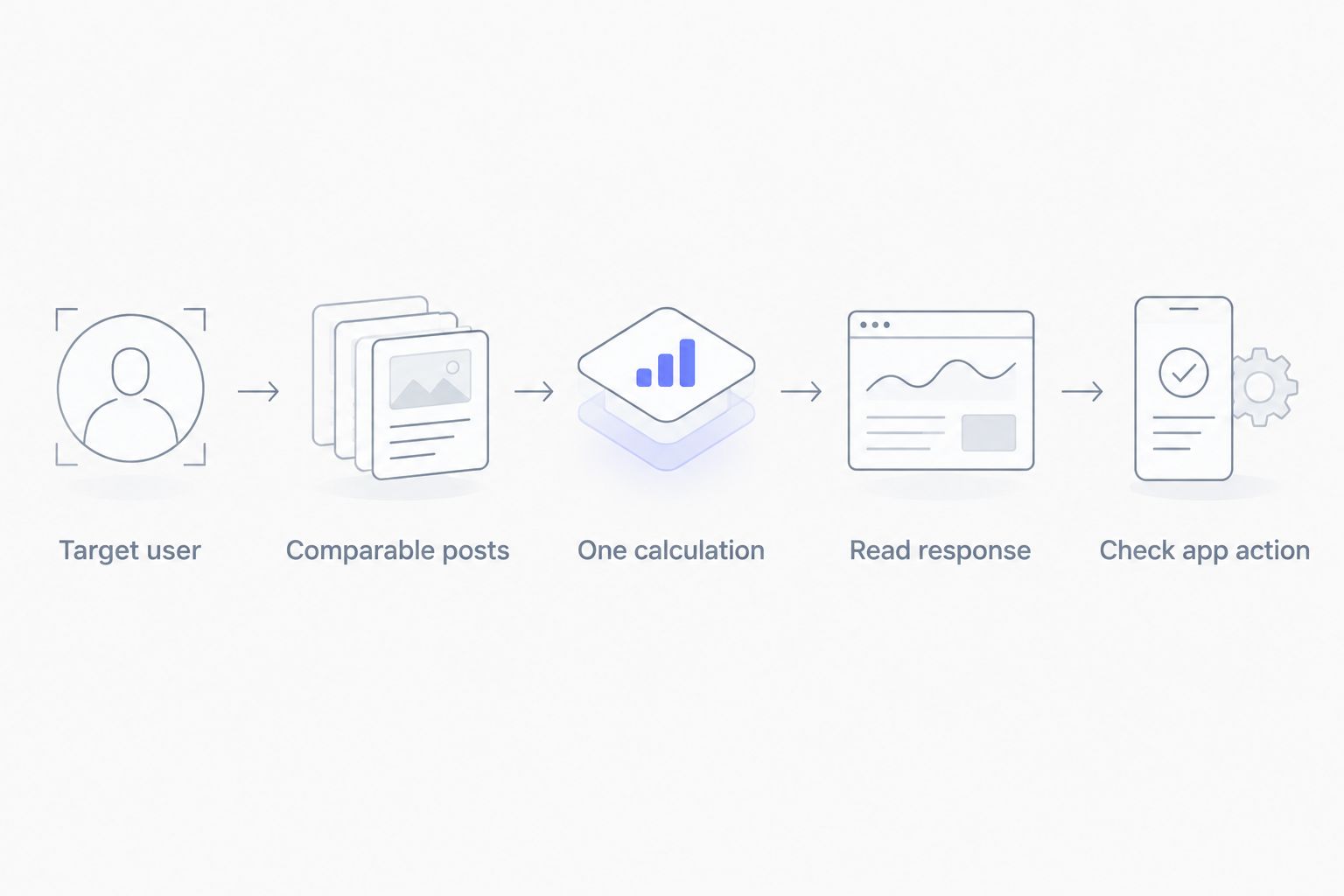
The order matters. A precise percentage attached to the wrong audience is still the wrong input for a creator decision. In 2026, keep the calculation reproducible so a teammate can review the same posts and reach the same numerical result.
Why does TikTok influencer engagement rate vary?
The rate changes when the audience, content, or calculation changes. Before interpreting a difference between creators, check these drivers:
- Denominator. Views and followers produce different percentages from the same engagement count. Label every rate.
- Interactions counted. Including shares or excluding comments changes the calculation. Use one definition across the shortlist.
- Post topic. An app demonstration invites different responses from a video on an unrelated subject. Compare content serving the same brief.
- Format. A question to viewers, a demonstration, and a reaction prompt ask for different behaviors. The rate reflects that prompt as well as interest.
- Timing of measurement. A post's views and interactions can change after you record them. Capture compared figures at a consistent point.
- Audience relevance. People can enjoy a creator's content without being prospective users of your app. Review what the comments are actually about.
None of these factors supplies a universal 2026 cutoff. They tell you whether the rate in front of you is useful evidence. If a creator cannot show how a reported rate was calculated, request the underlying post figures before treating it as comparable.
Can comments tell you more than the percentage?
Yes. Read comments for evidence that viewers understood the use case and wanted to know more. Questions about how an app works, who it serves, or how to find it mean something different from reactions to a creator's delivery. Both can be genuine engagement; only one directly addresses the campaign brief.
Look at the video before interpreting the comments. If it never identifies the app's purpose, the comment section cannot repair that missing explanation. If viewers repeat an incorrect understanding of the product, a high interaction count is a prompt to change the brief, not proof that the message landed.
Also inspect the conversation for relevance rather than treating every comment as a lead. A viewer can ask a useful question without installing, and an installer can act without commenting. Use comment quality to diagnose the creative. Use tracked app actions to assess the acquisition result.
Should you trust engagement rates in a creator media kit?
Treat a media-kit rate as a starting claim, then request the posts and calculation behind it. In 2026, a percentage without its denominator, included interactions, and measurement period cannot be matched fairly against another creator's percentage. The same applies to screenshots: they show a result, but not necessarily the method used to summarize it.
A media kit software for influencers workflow can make creator figures easier to present; it does not make unlike calculations comparable. Ask for the underlying video figures and recalculate them using your campaign definition. That keeps a polished presentation from deciding the shortlist.
The Viral App's app-focused creator work makes this distinction practical: the question is not whether a profile looks active, but whether the creator can communicate a B2C app use case to relevant viewers. Request examples that resemble the proposed campaign. If the strongest engagement comes from unrelated posts, mark it as evidence of the creator's content reach, not evidence that the app brief will perform the same way.
Is a higher engagement rate always better for app installs?
No. A higher TikTok engagement rate means more counted interactions relative to the denominator you chose. It does not show that viewers visited an app page, installed an app, or became relevant users. Choose the creator who can reach and explain the app to its prospective users, then assess the actions that follow.
A fair test gives each creator a clear brief and a defined route from the content to the app. Document what you can track before launch. If visits are trackable but installs are not, report visits as visits; do not rename them installs. If the attribution setup differs between creators, fix that before interpreting differences in outcome.
The Viral App can recruit and manage TikTok and Instagram creators for B2C mobile app campaigns. That service is relevant when you need a managed creator process, but it does not turn engagement into an install metric. Keep the creator scorecard and the app-outcome report connected while preserving the distinction between them.
How do you turn a good rate into a creator decision?
Use a pass-or-revise decision tied to the campaign goal. Pass a creator to the next stage when their relevant posts reach the intended audience, their engagement calculation is reproducible, and their content shows they can explain the app. Revise the brief or the shortlist when one of those conditions fails.
After publication, compare what the creative generated with the goal you set. Review views and engagement to diagnose the content. Review attributable visits and installs to assess acquisition. If people watch but do not understand what the app does, change the demonstration. If they ask useful questions but cannot find a clear next step, change the handoff. Do not change the engagement-rate target to conceal either problem.
For a 2026 creator campaign, write down the decision rule before results arrive. Specify the target user, the posts used as comparisons, the engagement formula, and the app action that matters. This gives your team a repeatable way to judge creators without claiming an unsupported platform-wide average.
FAQ
What is a good engagement rate for TikTok influencers in 2026?
A good rate is one that compares well with relevant creators using the same formula and accompanies evidence of audience fit. No universal percentage can establish whether a creator will drive app installs.
Should I calculate TikTok engagement rate by views or followers?
Use views for a video-level comparison and followers for an account-level comparison. Label the denominator and do not rank rates calculated on different bases as if they were equivalent.
Does a high TikTok engagement rate mean more app installs?
No. Engagement measures counted interactions against a chosen denominator; installs are a separate outcome. Review attributable app actions alongside the creator's content performance.
Which TikTok interactions should count toward engagement?
Define the interactions before comparing creators and apply that definition to every post. Likes, comments, and shares answer different questions when you inspect them separately.
Can I use a creator's media-kit engagement rate to choose them?
Use it to start a review, not to finish one. Request the underlying posts, denominator, included interactions, and measurement period before comparing creators.
Is a view-based engagement rate enough to judge an influencer campaign?
No. A view-based rate describes response among viewers, not whether those viewers match your target users or took an app action. Read the content and comments, then check the outcomes you can track.
What should I do if two TikTok creators report different engagement formulas?
Recalculate both creators' relevant posts using one formula. If you cannot obtain the underlying figures, do not treat their reported percentages as a direct comparison.
One last thing
The cleanest percentage can be the least useful one if it describes the wrong posts. Before you approve a TikTok creator in 2026, ask which videos produced the reported rate and whether those videos resemble the app content you want published. Keep engagement as a diagnostic; make the creator decision on fit, creative evidence, and the app actions you can verify.