
Use nano influencers when your priority is testing niche audiences and creator-led app demonstrations; use macro influencers when you need broader exposure from an audience that already matches your users. Neither tier guarantees installs, and follower count alone does not establish audience fit or conversion performance. For a 2026 campaign, choose the creator whose audience, content, and measured outcomes support your acquisition goal—not the largest profile you can recruit.
- Should app marketers use nano or macro influencers? Choose audience fit and measured app outcomes before follower count.
- Nano influencers suit focused audience tests; macro influencers suit broader exposure when their audience matches your users.
- Separate UGC production from influencer distribution: a useful video does not require a large following.
- Theviralapp manages TikTok and Instagram creators for B2C mobile app UGC and influencer marketing campaigns.
Why this matters
An influencer campaign makes two separate bets: that the creator can demonstrate your app convincingly, and that the people watching have a reason to install it. A large following answers neither question. A small following does not answer them either.
Decide what success means before deciding which influencer tier to hire. Use the guide to setting KPIs for an influencer marketing campaign to distinguish exposure, installs, and downstream user actions. That distinction prevents a campaign built for awareness from being judged as an acquisition test—or an acquisition campaign from passing on views alone.
Your decision also changes the work your team must manage. Recruiting, briefing, reviewing content, checking disclosures, and reconciling attribution remain necessary regardless of follower count. Include that work in the campaign plan rather than treating it as an afterthought.
Should app marketers use nano or macro influencers?
Choose nano influencers for focused learning and macro influencers for audience-matched distribution; judge both on the same business outcome. These are campaign roles, not guaranteed performance rankings. A creator belongs on your shortlist because the available evidence supports the role you need filled.
For your 2026 planning, this comparison separates the purpose of each approach from its limitations:
| Approach | Best for | What to evaluate | Main limitation |
|---|---|---|---|
| Nano influencers | Focused niche tests and individual creator demonstrations | Audience relevance, app understanding, recent content, and trackable user actions | A small following does not guarantee meaningful reach or installs |
| Macro influencers | Broader exposure to an established, relevant audience | Audience composition, recent distribution, sponsored content, and app outcomes | Large follower totals do not prove that viewers will become users |
| Mixed creator roster | Testing distinct audience and distribution roles together | Separate hypotheses, consistent reporting, and clear responsibilities | More moving parts make interpretation and campaign management harder |
Do not turn this table into a permanent rule that small creators convert and large creators only generate awareness. Either tier can fail on audience fit. Either can produce content that explains the app clearly.
Start with the question your campaign needs to answer. If you need to learn which user problem resonates, recruit around that problem. If you already have a working message and need wider distribution, evaluate creators with relevant reach. In both cases, require evidence rather than a tier label.
Nano influencers: best for focused audience tests
Nano influencers belong on the shortlist when you want a specific user perspective, not simply a smaller profile. Look for creators whose existing content demonstrates familiarity with the problem your app solves. The product should fit their subject matter without requiring an unrelated sales script.
For a fitness app, evaluate whether the creator can show the intended workout experience accurately. For an education app, evaluate whether the creator can explain the learning task. For a fintech app, review the proposed claims and demonstration before approving content.
The advantage of this approach is the clarity of the test: a particular creator explains a particular use case to a relevant audience. The limitation is that audience size tells you little about the eventual distribution of that post. You still need to inspect recent content and measure the campaign.
Best for: app teams testing specific user problems, audience segments, or demonstrations. Treat nano creators as a learning route, not as a shortcut to guaranteed engagement. Continue with creators whose content and user outcomes support the original hypothesis.
Macro influencers: best for audience-matched exposure
Macro influencers belong on the shortlist when broader distribution serves a defined campaign goal. Inspect who follows and watches the creator, where those viewers are located, and whether the app is relevant to their interests. Reach outside your supported market is not useful acquisition reach.
Review sponsored content alongside ordinary posts. You need to understand how the creator presents a partnership, whether the audience responds to the subject, and whether the app demonstration fits the creator's format. Do not substitute a popular unrelated video for evidence about product promotion.
The advantage is access to a larger established following. The limitation is the gap between followers, actual viewers, and qualified users. A broad audience can contain people with no reason to install your app, even when the content attracts attention.
Best for: app teams with a clear message and a relevant broader audience to reach. Choose a macro creator only when the audience evidence supports the distribution objective. Do not approve the partnership solely because the profile looks prominent.
Mixed rosters: best for separate, measurable campaign roles
A mixed roster is useful when nano and macro creators answer different questions. Smaller niche creators can test app use cases while larger creators distribute a message you have already chosen. Keep those responsibilities explicit in the brief and reporting.
The advantage is flexibility. You are not forcing every creator into the same job. The drawback is interpretation: if messages, audiences, publication timing, and destinations all change together, you cannot confidently explain why results differ.
Best for: teams that can manage distinct workstreams and evaluate them separately. Do not combine every creator into a single average and call the roster successful. Preserve creator-level results, then summarize them against the campaign objective.
Use a mixed roster because you need both roles—not because including every tier feels safer. If your team cannot review content, maintain tracking, and reconcile results across the roster, simplify the campaign before expanding it.
Why the right influencer tier varies
Your 2026 decision should reflect the app and campaign, not a universal follower-count rule. These factors determine which creator deserves consideration:
- Audience fit: match the creator's viewers to your intended users and supported markets. A relevant audience matters more than a tier label.
- Campaign objective: decide whether the job is exposure, content production, installs, or a downstream action. These require different evidence.
- App demonstration: assess whether the creator can show the actual product experience clearly and accurately. An unclear demonstration weakens either tier.
- Measurement: verify that you can connect campaign activity to the outcome you intend to evaluate. Views alone cannot establish install performance.
- Management needs: account for recruiting, briefing, approvals, disclosures, and reporting. A roster must fit your team's operating capacity.
- Content rights: distinguish permission to publish a sponsored post from permission to reuse the video in advertising or other placements.
These factors also explain why engagement-rate comparisons are insufficient. Comments and likes describe reactions to content; they do not establish that viewers installed the app or completed its intended action. Keep engagement as supporting evidence, not the final acquisition verdict.
How to choose creators before committing
Use a consistent selection process across both tiers. Your 2026 shortlist should make the reasons for each choice visible, so a teammate can understand the decision without relying on the creator's follower total.
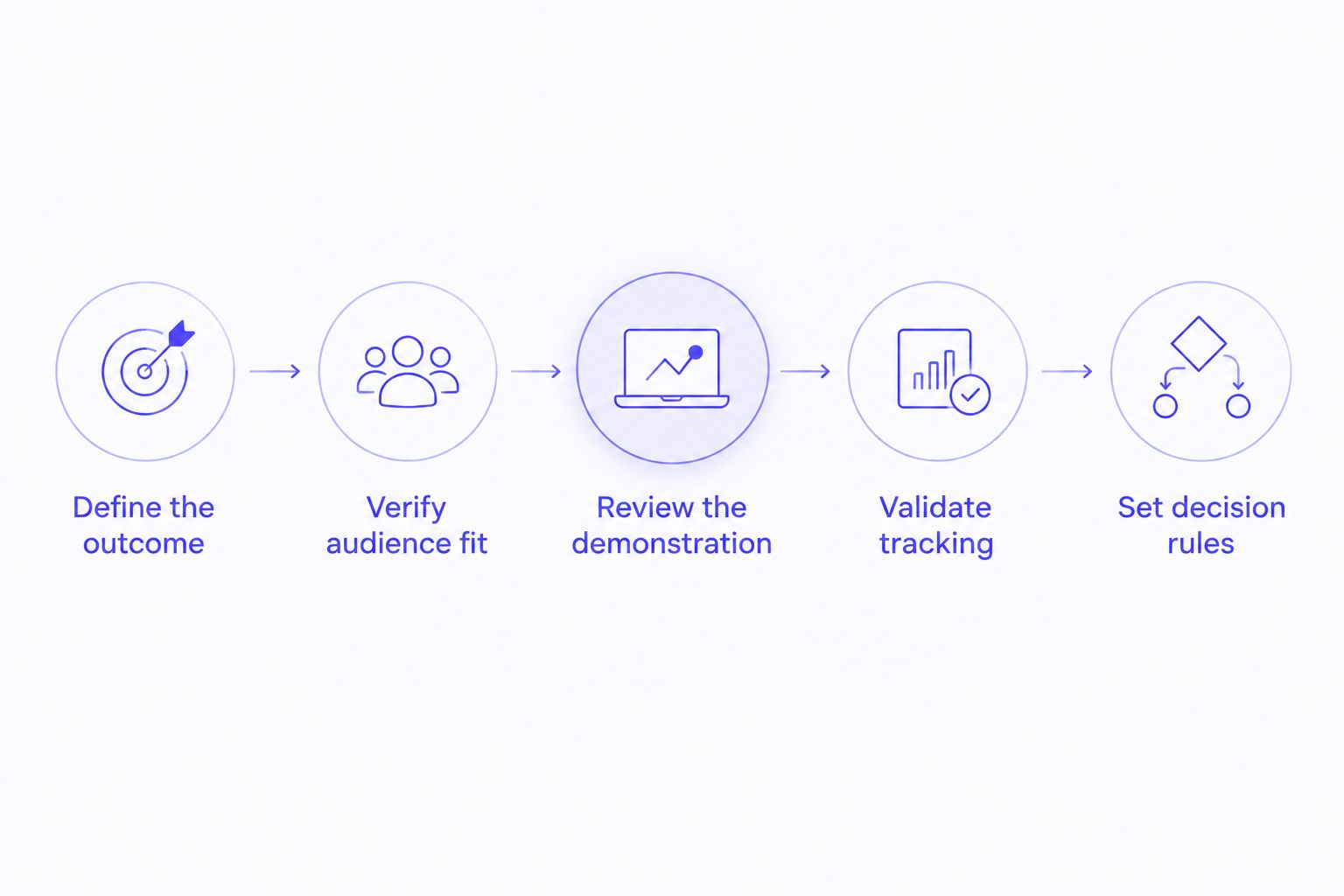
1. Define the outcome
Choose 1 primary outcome for the campaign: awareness, installs, or a defined in-app action. Record supporting metrics separately. This is a planning recommendation, not a performance benchmark; it keeps the campaign from changing its definition of success after publication.
2. Verify audience fit
Review audience information and recent posts against your user profile. Check geography, subject matter, and the context of audience responses. Use the guide to vetting TikTok influencers before a campaign to structure the review rather than relying on a profile screenshot.
3. Review the demonstration
Ask how the creator will show the app solving a real user problem. Specify the product action, claims that require review, and the intended next step. Leave room for the creator's delivery while keeping the product explanation accurate.
4. Validate tracking
Assign 1 distinct tracking link per creator where your campaign setup supports that approach. Test the destination and the intended conversion event before publication. Treat attribution as evidence with limitations, not as proof that every reported install would otherwise have been absent.
5. Set decision rules
Use 1 agreed reporting window for the comparison, and document how you will assess performance against your own acquisition requirements. Keep timing consistent. Do not reward one creator for a longer observation period while judging another immediately after publication.
Measure user quality, not just the install
For an acquisition campaign, an install is an intermediate outcome. Define the action that shows a user has started receiving value from your app, then evaluate that action alongside installs. The appropriate event depends on the product; do not apply the same activation definition to every app category.
Keep creator-level reporting connected to the original objective. A creator producing attention but few measured user actions is not automatically a failure if awareness was the assignment. The same result does not establish success when the assignment was acquisition.
Separate reported attribution from incremental impact. A tracking system can associate an action with a campaign touchpoint, but that association alone does not prove the campaign caused additional demand. State what the reporting establishes and avoid stronger claims.
Do not select a winning tier from views alone. Compare qualified user outcomes under consistent conditions, and record differences in message, audience, distribution, and timing. Those differences often matter more to the next decision than the nano or macro label.
When does agency support make sense?
Agency support is relevant when recruiting and managing creators competes with your team's core growth work. Theviralapp provides UGC and influencer marketing campaigns for B2C mobile apps, recruiting and managing TikTok and Instagram creators.
Theviralapp is a fit for B2C mobile app teams seeking managed TikTok and Instagram creator campaigns. That describes the service and target buyer; it is not a claim that an agency can guarantee views, installs, or a winning influencer tier.
The trade-off is an additional management relationship. You still need to provide accurate product information, approve relevant claims, and agree on measurement responsibilities. Before engaging any agency, define who owns creator communication, content approval, reporting, and the campaign materials you expect to retain.
Are nano influencers better for app installs?
Nano influencers are not automatically better for app installs. Select them when their audience and demonstrations match a specific acquisition hypothesis, then validate that hypothesis with measured user actions. A small following is not conversion evidence.
When should you choose a macro influencer?
Choose a macro influencer when relevant broader exposure serves your campaign objective and audience information supports the choice. For a 2026 acquisition campaign, require the same tracking and user-quality review you would apply to a smaller creator. Recognition alone is not an acquisition plan.
Can you use creator content without buying distribution?
Yes—content production and influencer distribution are separate campaign assignments. A UGC creator can produce an app demonstration without publishing it to an established audience, provided the agreement covers the intended work and use. Evaluate production quality and distribution value separately.
FAQ
Should app marketers use nano or macro influencers in 2026?
App marketers should choose nano influencers for focused audience tests and macro influencers for relevant broader exposure. Validate either choice against audience fit, the campaign objective, and measured app outcomes rather than follower count alone.
Are nano influencers guaranteed to have better engagement?
No, the nano label does not guarantee better engagement. Review each creator's recent content and audience responses, then keep engagement separate from evidence of installs or activation.
Is a macro influencer better for an app launch?
A macro influencer is appropriate when the audience matches your intended users and broader exposure serves the launch objective. A large following does not establish product relevance or conversion performance.
Should I hire an influencer or a UGC creator for my app?
Hire an influencer when audience distribution is part of the assignment; hire a UGC creator when the assignment is content production. Specify publication and reuse rights separately rather than assuming one agreement covers both.
How do I compare nano and macro influencer results?
Compare nano and macro influencer results using the same primary outcome, reporting window, and measurement definitions. Review audience and message differences before attributing performance to follower tier.
Can Theviralapp manage creators for a mobile app campaign?
Theviralapp recruits and manages TikTok and Instagram creators for B2C mobile app UGC and influencer marketing campaigns. Define the campaign objective and measurement responsibilities before choosing the creator roster.
What should I check before scaling an influencer campaign?
Check audience fit, tracking accuracy, content rights, and the quality of acquired users before scaling an influencer campaign. More views do not resolve a broken conversion path or unclear product demonstration.
One last thing
A strong creator cannot repair a confusing install path. Before your 2026 campaign expands, follow the journey from the post to the destination and through the first meaningful app action. Confirm that the experience matches the promise made in the video.
When planning with Theviralapp or an internal team, write down the next decision each campaign result will support. If the report cannot tell you which audience, message, or creator assignment to repeat, it is a record of activity—not yet a useful growth decision.