Influencer rates by follower tier are set by a handful of variables: reach, niche, usage rights and format. Follower count is only the starting point. No honest single dollar average exists across tiers, so this page gives you the tier structure, how each tier prices, and how to budget a 2026 app campaign without paying for vanity reach.
- Nano, micro, macro and mega creators price differently, and published rate cards rarely match what an app campaign actually costs.
- The Viral App runs 5 to 60 creators and 300 to 3,600 videos a month, so tier mix is a volume decision.
- Usage rights, niche and format move a quote more than a 10K follower gap inside the same tier.
- Budget per tested angle first, then scale the formats that produce installs.
Why this matters
Tier is the first filter every creator quote passes through, and it is also the most misleading one. A 40K creator in a tight fitness niche can quote above a 150K creator in a broad lifestyle niche. If you budget by follower count alone, you overpay for reach that does not convert to installs.
The Viral App has built creator programs across a network of 10,000+ creators and 60+ apps. The pattern repeats: tier decides the pricing model, not the final number. For flat-fee context on TikTok specifically, read the guide on how much TikTok creators charge for sponsored posts.
Influencer rates by follower tier: the benchmark table
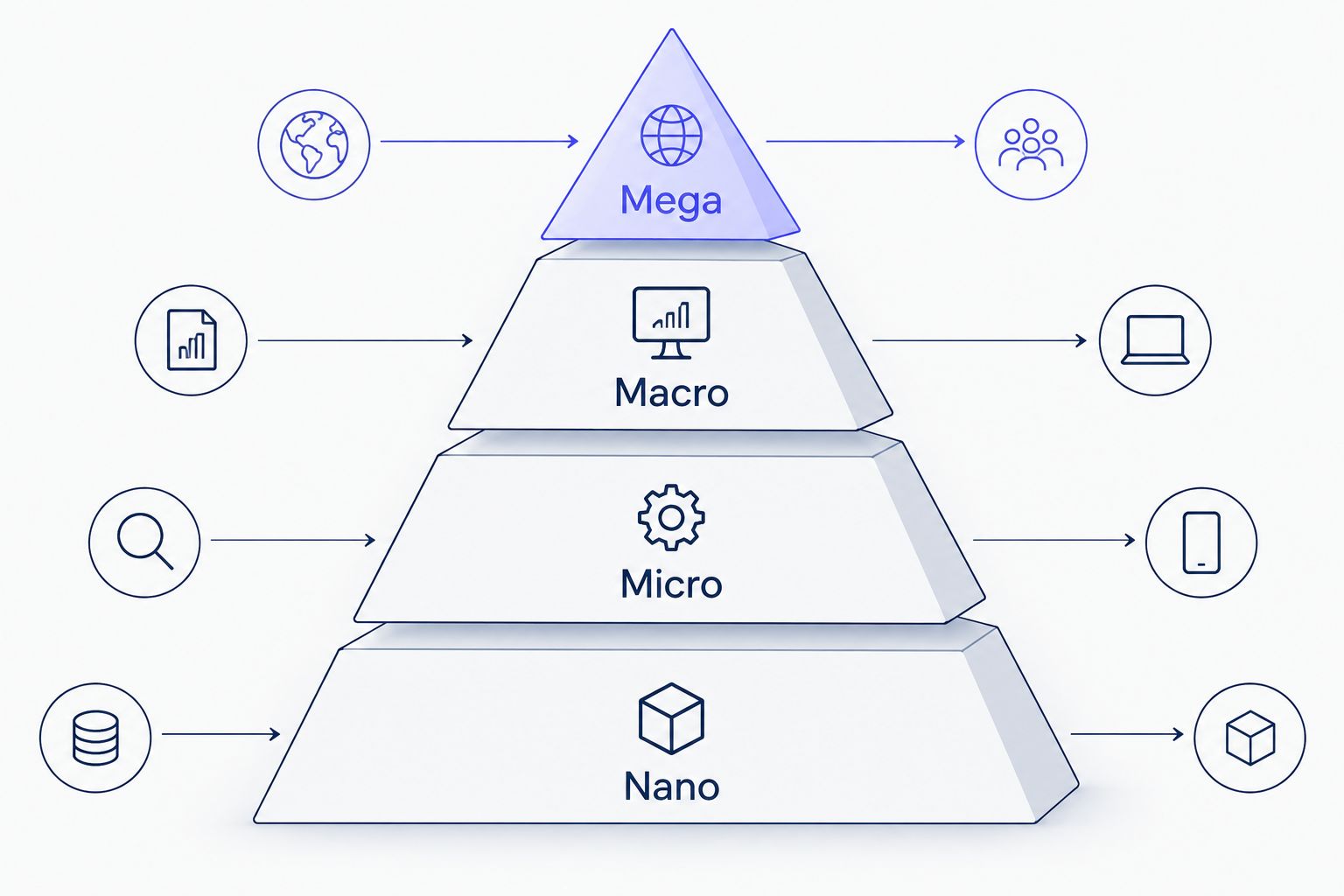
The short answer: rates climb with tier, but the pricing structure changes too. Nano and micro creators are usually booked per video, often at a flat fee per post. Macro and mega creators are usually negotiated per campaign, with usage rights and exclusivity priced separately.
The tier ranges below follow the common industry convention. Rate cells read "Scoped per campaign" because any single figure would hide the real spread.
| Tier | Followers | Typical role in an app campaign | Common pricing structure | Rate |
|---|---|---|---|---|
| Nano | 1K to 10K | Volume testing of hooks and angles | Flat fee per video, sometimes product or perk based | Scoped per campaign |
| Micro | 10K to 100K | Core of an always-on UGC program | Flat fee per video, often bundled in monthly batches | Scoped per campaign |
| Macro | 100K to 1M | Reach pushes and launch moments | Negotiated per campaign, usage rights priced separately | Scoped per campaign |
| Mega | 1M+ | Awareness bursts and brand moments | Negotiated per campaign, exclusivity and rights priced separately | Scoped per campaign |
| All tiers | Any | Yardstick for your own quotes | Set by scope, niche, rights and format | Scoped per campaign |
Micro is where most app programs concentrate, because it balances reach with the volume needed to test. Mega trails on cost efficiency for installs, because one large placement gives you a single angle to learn from, while the same budget across a micro roster gives you many.
What the table tells you
The widest spread sits at the top of the table. Mega quotes carry the most negotiation, and nano quotes carry the least. That makes nano and micro the easiest tiers to benchmark against your own spend, and macro and mega the tiers where you need a scoped brief before any quote means anything.
Method and limits. This table reflects tier definitions in common industry use and how The Viral App structures creator programs. It carries no dollar figures, because published rate cards rarely include usage rights, niche premiums or exclusivity. That is the named limitation: you cannot read a final price off a tier label.
How each tier behaves in an app campaign
Nano creators
Nano creators give you cheap hook tests. You brief 20 creators on the same app and see which opening line holds attention. The tradeoff is operational load, because more creators means more briefs, approvals and payments to manage. Best for: early angle discovery. Verdict: Buy for testing, Skip as your only tier.
Micro creators
Micro is the working tier. Creators at this size post often enough to deliver a steady batch each month, and audiences are specific enough that a niche app finds its buyer. The VibeCode campaign went from $0 to $1.3M ARR in 2.5 months on 36M views of pure UGC, a program built on volume and fast iteration rather than a single big placement. Best for: always-on programs targeting installs and subscriptions. Verdict: Buy.
Macro creators
Macro creators bring reach on a date. They fit a launch window or a feature release when you want a large audience in a short span. The costs are higher, the angle count is lower, and usage rights need clear terms before you sign. Best for: launch moments. Verdict: Hold until your angles are proven at micro scale.
Mega creators
Mega creators are awareness plays. One post can reach a large audience, but the install signal is harder to isolate, and the quote reflects the audience rather than your conversion odds. Best for: brand moments with budget to spare. Verdict: Wait until you have a running system and a proven offer.
What moves a quote more than follower count
These variables shift a creator quote regardless of tier:
- Usage rights. Using a video as a paid ad costs more than posting it organically. Winning organic videos become paid creative in The Viral App's programs, so rights should be settled before you brief.
- Niche fit. A creator whose audience already uses apps like yours quotes with confidence and converts better.
- Format and platform. TikTok, Instagram Reels and YouTube Shorts price differently, and multi-platform packages change the math.
- Exclusivity. Blocking a creator from competing apps adds to the quote.
- Volume. A batch of videos per month lowers the effective cost per video against one-off bookings.
The contract side of this is covered in the guide on how to price a UGC creator contract for app campaigns.
How to use these benchmarks
Start from outcomes, then work backward into tiers. Four takeaways follow.
- Fund testing before reach. Spend your first cycle on many micro and nano creators so you learn which hooks work. The Viral App's service rhythm is 4 to 5 new angles a week, and underperforming formats get stopped within 5 to 10 days.
- Match tier to stage. Early-stage apps do better with volume. Later-stage apps can add macro placements once the winning angle is known.
- Compare quotes inside a tier, not across tiers. Ask each creator for the same scope: number of videos, platform, rights window and revision rounds.
- Tie every dollar to installs. Views are a leading signal. Installs and subscriptions are the result. Clicked turned 26.9M views from 15 creators across Europe, the US and LATAM into 2,000+ videos over 3 cycles, with views tied to App Store installs.
The measurement layer matters as much as the tier mix. Attribution only works if each creator has a trackable path from the video to the app store, and even a simple link in bio analytics setup shows which creator's profile traffic turns into taps, which is the first signal worth reading before install data arrives. For the nano versus macro decision itself, see the guide on whether app marketers should use nano or macro influencers.
How The Viral App prices creator programs
The Viral App scopes programs to your goals on a strategy call. Programs run 5 to 60 creators and 300 to 3,600 videos a month across TikTok, Instagram Reels and YouTube Shorts. The agency handles sourcing, vetting, briefs, scripts, approvals, posting schedules, payments and reporting, so you do not manage a roster of individual quotes yourself.
The program runs 90 days: foundation, scaling, then a running system. At the end, you choose full transfer of creator relationships, processes, tracking tools and playbooks, or continued management by The Viral App. Weekly reports cover views, engagement, angle analysis and installs.
Scale examples show the range. Invoice Fly became the #1 invoice app in the US with 90+ creators and 30M+ views. Cal AI passed $30M+ ARR and 5M+ users, with 500+ creators and 250M+ views a month at peak. That is the Cal AI case only, not a company-wide figure.
FAQ
What are the influencer follower tiers in 2026?
The common convention is nano at 1K to 10K, micro at 10K to 100K, macro at 100K to 1M and mega at 1M and above. Platforms and agencies draw the lines slightly differently, so confirm the range before comparing quotes.
Do influencer rates always rise with follower count?
No. Niche, usage rights, format and exclusivity can lift a smaller creator's quote above a larger one's. Follower count sets a starting range, not a final price.
Which tier is best for app installs?
Micro is the working tier for most app programs because it gives you enough creators to test many angles. Nano suits early hook testing, and macro suits launch moments once you know what converts.
Why does this page show no dollar rates?
Published rate cards leave out usage rights, exclusivity and niche premiums, so a single figure per tier would mislead you. The Viral App scopes pricing to your goals on a strategy call.
Should I pay a flat fee or per install?
Flat fees are the standard for nano and micro creators, and they keep briefs simple. Performance structures add tracking work and are negotiated case by case.
How many creators does an app campaign need?
The Viral App runs programs of 5 to 60 creators, producing 300 to 3,600 videos a month. Size the roster to the number of angles you want to test each week.
Can winning creator videos be used as ads in 2026?
Yes, if usage rights cover paid placement. The Viral App turns winning organic videos into paid creative, so settle rights in the contract before the first brief.
One last thing
The cheapest tier to learn from is not the cheapest tier to book. A program that tests many angles across micro and nano creators for one cycle will tell you more about where to spend macro budget than any rate card. VibeCode's path to $1.3M ARR came from that kind of iteration, not from a single large placement.