Meta description: Data-driven comparison of micro-influencers vs macro-influencers for mobile app growth in 2026: why smaller creators (5K–50K followers) deliver 3x higher engagement, $5–$6.50 return per $1 spent, and 60–70% lower costs. Complete guide covering selection frameworks, vetting red flags, collaboration models, attribution formulas, portfolio diversification across 20–100 creators, and scaling micro-networks for compounding organic installs.
Every year since 2020, the data on micro-influencers versus macro-influencers has pointed in the same direction. And every year, the gap gets wider.
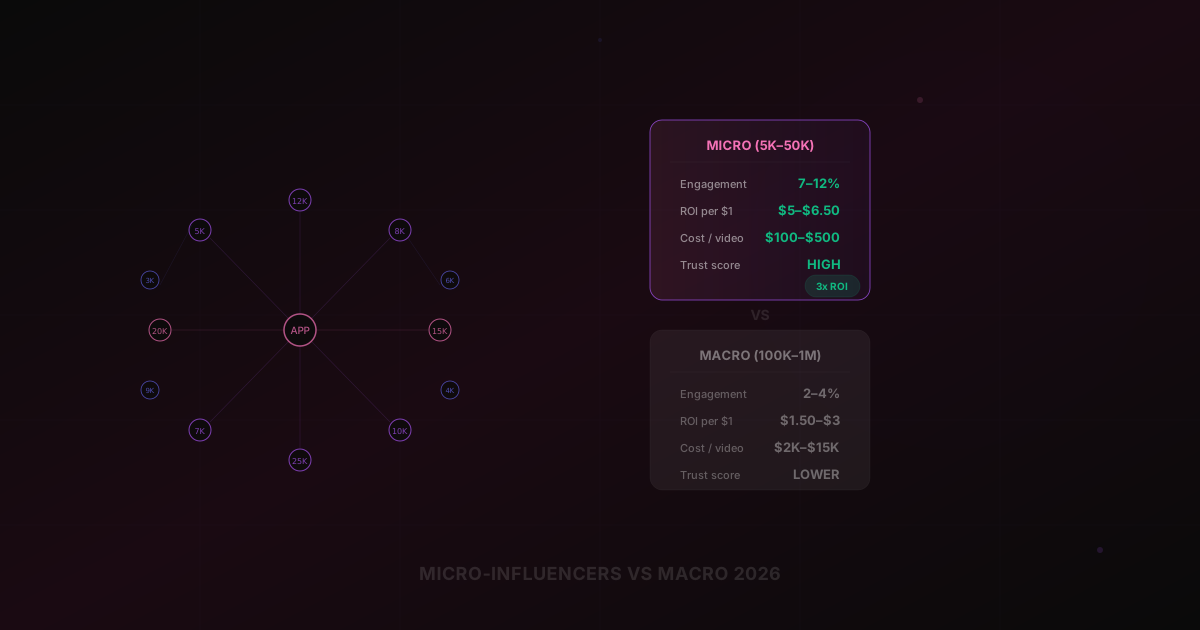
In 2026, the numbers aren't subtle anymore. Micro-influencers (creators with 5,000–50,000 followers) deliver 3x higher engagement rates than macro-influencers (100K–1M+) across TikTok, Instagram Reels, and YouTube Shorts. For mobile app campaigns specifically, the performance delta is even more dramatic: micro-creators produce content that converts to installs at 2–4x the rate per dollar spent, with measurably better retention downstream.
This isn't an argument against macro-influencers entirely. There are moments when reach matters more than efficiency. But for B2C mobile app growth teams — especially those working with limited budgets, testing new markets, or building organic-first strategies — micro-influencers aren't just the better option. They're the economically rational option by a wide margin.
This guide covers everything you need to build, manage, and scale a micro-influencer strategy for mobile app growth: the data behind the shift, selection and vetting frameworks, collaboration structures, attribution systems, portfolio strategy, and the common mistakes that waste budget.
Let's ground this in specifics. The following benchmarks reflect 2025–2026 performance data across B2C app campaigns on short-form platforms:
The pattern is consistent and well-documented: as follower count increases, engagement rate decreases. This isn't a flaw in macro creators — it's an inherent property of large audiences. A 500K-follower account has a diverse audience with varied interests. A 15K-follower account in a specific niche has an audience that self-selected for that exact topic. The engagement quality and relevance of that smaller, focused audience is fundamentally different.
To illustrate: a $5,000 monthly influencer budget can secure 1 macro-influencer video or 15–25 micro-influencer videos. The 15–25 micro videos give you 15–25 independent chances to find a viral hit, 15–25 pieces of reusable UGC content, and performance data across 15–25 different audiences. The single macro video gives you one shot. The math overwhelmingly favors volume and diversification.
Micro-influencers feel like peers, not celebrities. Their audiences follow them because of genuine interest in a specific topic — fitness, productivity, parenting, cooking, tech — not because they're famous. When a 12K-follower fitness creator recommends a workout app, the recommendation carries the weight of a friend's suggestion. When a 500K-follower lifestyle influencer promotes the same app, viewers immediately suspect a paid partnership, even if the creator genuinely uses the product.
In 2026, audiences are more ad-literate than ever. The "is this an ad?" filter activates instantly for large creators but remains dormant for smaller ones. This trust differential directly translates to higher click-through rates and higher install conversion rates per view.
A macro fitness influencer has an audience that spans casual gym-goers, bodybuilders, yoga practitioners, runners, and people who just like fitness content aesthetically. A micro-influencer who posts exclusively about home workouts for busy parents has an audience composed almost entirely of — busy parents who do home workouts. If your fitness app targets that exact demographic, every impression from the micro-creator is a qualified impression. With the macro creator, you're paying for impressions delivered to bodybuilders and aesthetic browsers who will never download a home workout app.
This niche precision extends beyond demographics into psychographics. Micro audiences share values, pain points, and behavior patterns that align tightly with specific app use cases. The result: higher intent per view, higher conversion per click, and better retention post-install because the users genuinely match your target profile.
One of the most undervalued advantages of micro-influencer partnerships: the content they create can be repurposed as paid ad creative. A TikTok Spark Ad running on a micro-influencer's organic video retains all its authenticity while gaining paid distribution. A video that performed well organically on a 15K-follower account becomes a proven ad creative that can be scaled to millions of impressions via TikTok Ads or Meta partnership ads.
Macro-influencer content is harder to repurpose because their face and personal brand carry expectations that don't transfer well to paid ad contexts. Micro-creator content, by contrast, looks like any user's organic video — which is exactly what performs best in paid formats.
Always negotiate content usage rights upfront. An extra 20–30% on the creator fee for full usage rights is the single best investment in your influencer budget. A $250 micro-influencer video with usage rights can become a $0.80–$1.20 CPI paid ad creative that runs for weeks.
The difference between a micro-influencer campaign that delivers $6 ROI per dollar and one that delivers $0.50 comes down almost entirely to creator selection. Most of the work happens before a single video is produced.
Engagement rate is the baseline screening metric. Apply these minimums:
Calculate engagement as (likes + comments + shares + saves) / views, not followers. View-based engagement is more accurate for short-form content where algorithmic distribution means most views come from non-followers.
Engagement rate alone isn't enough. A creator with 12% engagement on cooking content is useless for a fitness app. Verify niche fit through:
Before committing budget, evaluate consistency:
The entry point. Pay a creator for a single video to test how their audience responds to your app. Keep creative direction minimal — send them your top-performing organic video as a reference and let them adapt it to their style. Evaluate performance after 72 hours.
When to use: Initial testing phase when you're evaluating 10–20 creators simultaneously. Expect 20–30% to perform well enough to continue with.
Once a creator's first video shows strong signals, lock in a multi-video deal at a discounted per-video rate. This gives you variation testing (different hooks, formats, lengths) with a proven creator. Typically 20–30% cheaper per video than one-off pricing.
When to use: After a successful test video. Ask for 3–5 videos delivered over 2–3 weeks with different approaches.
For creators who consistently deliver strong performance, transition to a monthly retainer. This secures priority access, faster turnaround, and deeper brand familiarity. The creator becomes genuinely familiar with your app over time, which shows in the authenticity of their content.
When to use: For your top 3–5 performers after 2+ months of successful collaboration.
Pay a reduced base fee ($50–$150 per video) plus a performance bonus tied to installs or conversions. Typical structure: $100 base + $1–$3 per verified install from their unique tracking link. This aligns incentives — the creator is motivated to create content that actually converts, not just content that looks good.
When to use: With creators who have demonstrated conversion ability and are confident enough in their audience to accept performance-based compensation. Not all creators will agree to this model, but those who do tend to be your highest performers.
Regardless of collaboration model, negotiate content usage rights from the start:
When working with 15+ micro-influencers simultaneously, negotiate bulk economics:
Influencer campaigns without proper attribution are guesswork disguised as strategy. Here's the measurement infrastructure you need:
Every creator gets a unique tracking mechanism — no exceptions:
?utm_source=tiktok&utm_medium=influencer&utm_campaign=creator_name_feb26.Your mobile measurement partner should be configured to:
Cost Per Install (CPI):
CPI = Total Creator Cost / Total Attributed Installs
Target: <$2.00 for micro-influencer campaigns. Strong performers hit $0.50–$1.00.
Return on Creator Spend (ROCS):
ROCS = (Total Revenue from Influencer Cohort) / (Total Creator Spend)
Target: >$5.00 return per $1 spent. Measure at 30-day and 90-day windows to capture subscription revenue and LTV.
LTV Uplift per Creator:
LTV Uplift = (Avg LTV of Creator's Install Cohort) – (Avg LTV of General Organic Installs)
Positive LTV uplift means the creator is bringing in higher-quality users than your baseline organic channel. This metric identifies which creators to scale with and which to deprioritize even if their CPI looks acceptable.
Incremental Install Calculation:
Incremental Installs = (Installs during campaign period) – (Baseline installs expected without campaign)
This isolates the true impact of the influencer campaign from organic growth you would have achieved anyway. Track your baseline daily install rate for 2 weeks before launching a campaign, then compare during and after.
The single biggest strategic mistake in influencer marketing is concentration risk — putting too much budget into too few creators. Here's why diversification matters and how to structure your portfolio:
Structure your creator portfolio in three tiers:
Monthly cycle: Promote top Tier 3 performers to Tier 2. Promote top Tier 2 performers to Tier 1. Offboard consistently underperforming Tier 2 creators. Continuously recruit new Tier 3 test creators. The portfolio should always be refreshing — no creator holds their position without ongoing performance.
Don't just diversify by creator — diversify by niche and sub-audience:
Each sub-niche will have different top-performing hooks, formats, and messaging angles. What resonates with a "frugal living" audience (saving money) is completely different from what resonates with an "investing" audience (growing money), even though both could use a budgeting app.
Once you've proven the model with 20–30 individual micro-influencers, the next evolution is building micro-networks — interconnected groups of creators that amplify each other and create the appearance of organic cultural momentum.
Scale targets: A mature micro-network for a B2C app typically includes 50–100 active creators producing a combined 100–200 videos per month. At this scale, the network generates self-sustaining organic discovery that compounds month over month, reducing your dependency on any single creator or paid channel.
What happens: You send a word-for-word script. The creator reads it stiffly. The video feels like an ad. Their audience doesn't engage. You blame the creator.
Fix: Send a brief with key messages (3–5 bullet points maximum), a reference video for tone and format, and let the creator translate it into their own voice. The best-performing micro-influencer content happens when creators genuinely internalize the value proposition and express it naturally. Your brief should provide direction, not a teleprompter script.
What happens: You pick the 20 creators with the highest follower counts in your budget range. Half have poor engagement, bought followers, or irrelevant audiences. Campaign ROI is terrible.
Fix: Follower count is the least important selection criterion. Prioritize: engagement rate > niche fit > audience quality > content consistency > follower count. A creator with 8K followers and 12% engagement in your exact niche will outperform a creator with 45K followers and 3% engagement in a general lifestyle niche every time.
What happens: You spend $5,000 on 20 creators and see installs increase "around the same time." You don't know which creators drove installs, which formats worked, or what your actual CPI was. You can't optimize because you have no data.
Fix: Set up tracking before you contact your first creator. Every creator gets a unique deep link and promo code. Your MMP tracks the full funnel per creator. Without this, you're throwing money at a wall and hoping something sticks.
What happens: Transactional relationship. Creator delivers the minimum. No investment in understanding your product. Content feels hollow.
Fix: Give creators genuine access to your app, share your vision, ask for their input on what would resonate with their audience, and treat feedback as valuable product insight. Creators who feel like partners, not hired hands, produce dramatically better content. Share performance results with them. Celebrate their wins publicly. The relationship investment pays for itself in content quality and creator retention.
What happens: You run one round of 10 creator videos, none go viral, and you conclude micro-influencer marketing "doesn't work for your app."
Fix: The first round is data collection, not results. Expect 20–30% of first-round creators to show promising signals. Use that data to refine your brief, adjust creator selection criteria, and run a second round that's significantly more targeted. Most successful micro-influencer programs hit their stride in month 2–3, not week 1.
Different app categories require different micro-influencer approaches. Here are the patterns that work by category:
Best creator niches: Home workout creators, gym influencers, yoga practitioners, running coaches, physical therapists, sports-specific trainers.
Top-performing formats: 30-day transformation challenges, workout routine demonstrations featuring the app's tracking, "X-day challenge using [app]" with daily progress clips, comparison videos of workout apps.
Key insight: Fitness micro-influencers with 5K–20K followers who specialize in a specific workout style (calisthenics, HIIT, Pilates) consistently outperform general fitness accounts with 50K+ followers because their audiences have a specific workout preference that the app can serve directly.
Best creator niches: Productivity content creators, studygram/studytok, self-improvement, ADHD management, morning routine creators, bullet journaling.
Top-performing formats: "My morning routine using [app]" (lifestyle integration), screen-recording walkthroughs of the app, streak milestone celebrations ("I just hit 100 days!"), "how I finally built consistent habits" personal stories.
Key insight: The ADHD management niche on TikTok has exceptionally engaged audiences with high willingness to try new tools. Creators in this space who authentically discuss how an app helps manage daily challenges see some of the highest install conversion rates in the productivity category.
Best creator niches: Personal finance beginners, frugal living, debt payoff journeys, student finance, side hustle income tracking, investing for beginners.
Top-performing formats: "How I saved $X in Y months" result stories, "POV: You check your budget and actually feel good" skits, monthly budget reviews on camera, comparison of finance tools.
Key insight: Finance content that leads with specific dollar amounts ("I saved $2,400 in 60 days") dramatically outperforms vague claims. The specificity signals credibility. Micro-influencers in the debt payoff and frugal living niches have particularly high-trust audiences because they share vulnerable financial details, creating deep community bonds that transfer to product recommendations.
Best creator niches: Language learning journey creators, travel vloggers, polyglot content, cultural education, study-with-me, expat communities.
Top-performing formats: "Speaking [language] after X months of [app]" progress videos, funny fail compilations while learning, "testing my [language] on native speakers" street content, daily lesson streak showcases.
Key insight: The "progress video" format is uniquely powerful for language apps because improvement is audible. A creator speaking broken Spanish in Month 1 and conversational Spanish in Month 3 is visceral social proof that the app works. These videos have exceptional rewatch rates as viewers compare the before and after.
The shift toward micro-influencers isn't a trend that will reverse. It's a structural consequence of how social platforms work: algorithms reward authentic engagement, small audiences engage more authentically than large ones, and consumers trust relatable people more than celebrities. These dynamics will only intensify as platforms continue optimizing for watch time, completion rate, and genuine interaction.
For mobile app growth teams, the strategic implication is clear: build a diversified portfolio of 20–100 micro-influencers, invest in attribution infrastructure, treat creators as partners, and optimize based on conversion data — not vanity metrics. The teams that master this approach will acquire users at 60–70% lower cost than those relying on macro-influencers or paid-only strategies, with better retention and higher LTV downstream.
The economics are overwhelmingly in your favor. The framework is straightforward. The risk is low (small individual commitments, high diversification). The only requirement is operational discipline: vetting rigorously, tracking meticulously, iterating consistently, and scaling what works while cutting what doesn't.
We'd love to hear your experience. Share your thoughts in the comments:
The data is clear. Smaller creators, bigger results. Build the system, let the numbers speak.
Want help building a micro-influencer network for your app? Schedule a free consultation
Transform influencer marketing for your mobile app from one-off campaigns to an evergreen growth engine. Proven 2026 strategies inside.
The complete UGC manager playbook for 2026. Learn how to recruit creators, manage operations, and scale content research.
Measure the real ROI of your UGC and influencer campaigns. Discover the metrics and attribution models that matter most for app growth in 2026.