Inside The Viral App's UGC system: the exact 3-phase playbook our managers follow, from recruiting reliable creators on Sideshift, to daily operations and content approval, to research that turns competitor wins into scalable formats. The behind-the-scenes process behind every 10M+ view campaign.
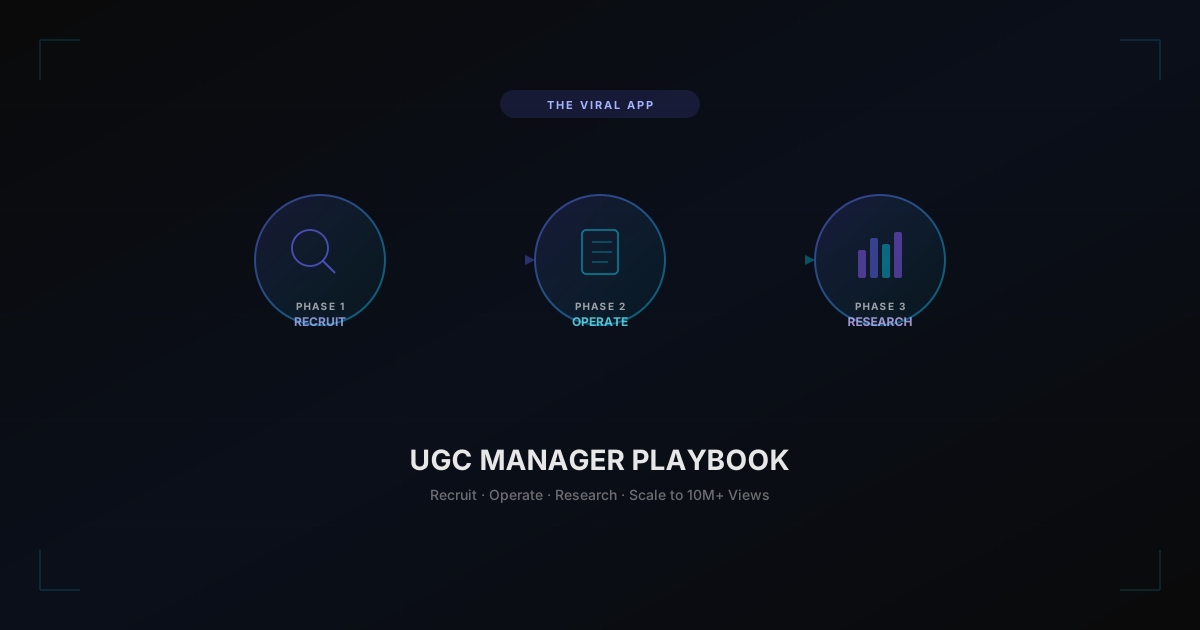
In 2026, scaling a B2C mobile app with UGC campaigns isn't about finding 'viral creators'. It's about building a repeatable system. At The Viral App, our UGC Managers run the full machine: recruitment, operations, and research. This is the exact playbook they follow to recruit 25+ creators, produce 1,500+ videos per month, and consistently hit 10M+ monthly views at $2-4 CPM.
The Viral App UGC Manager system has three phases: (1) Recruitment via Sideshift with structured calls and warm-up checks, (2) Operations with daily content review, compliance, and engagement seeding, and (3) Research that analyzes competitors and adapts formats to each creator's strengths. This system turns raw creator volume into owned, compounding growth for consumer apps. For more insights, read our guide on content repurposing strategies. For more insights, read our guide on app content marketing and SEO.
We don't chase follower count. We chase reliability, quality, and fit.
This phase filters for professionals who treat UGC like a job. It's the foundation of every successful creator army.
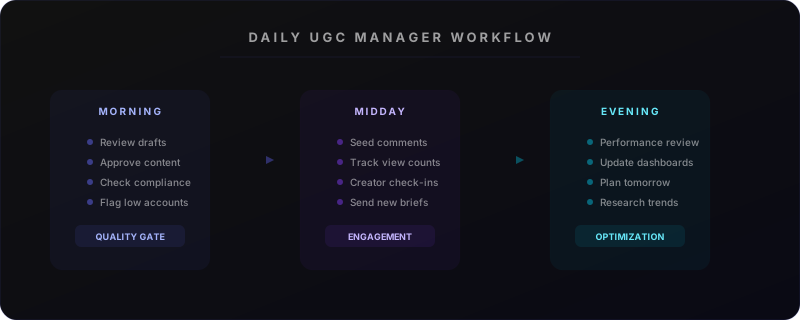
Once creators are live, the UGC Manager becomes the conductor.
Strong operations turn 25 creators into a predictable content engine.
This is where the magic happens. Research isn't one-off. It's weekly and data-driven.
This phase ensures we're never guessing. Every video is built on proven patterns.
Together, they create owned distribution that compounds. The only sustainable way to scale consumer apps today.
The Viral App runs this exact UGC system for B2C apps that want to own their growth instead of renting it from ads. From creator armies to performance dashboards to 10M+ view campaigns.
Ready to build yours? Schedule a free growth audit today.
Ready to scale your app? Schedule a free consultation
Running a UGC program without a structured creator database is like managing paid media without a spreadsheet. It works for 5 creators. It falls apart at 25. Your creator database is your operating system — build it right from day one.
We recommend Airtable or Notion for this. Both support linked records, filtered views, and automations. Here are the fields every UGC manager needs to track:
Red flags to watch for during onboarding: Creators who negotiate aggressively before delivering a single piece of content. Creators who ghost for 48+ hours during the briefing phase. Creators who claim massive followings but have engagement rates below 1%. Creators who refuse to show previous brand work. Any of these should move them to a "monitor" status before committing budget.
Set up filtered views for your daily workflow: "Active Creators Needing Briefs," "Content Pending Review," "Payments Due This Week," and "Top Performers (Reliability 4+)." These views turn your database into an actual management tool instead of a static list.
Getting compensation right is the difference between a creator program that scales and one that bleeds money. There's no single "correct" model — the right approach depends on your budget, content volume needs, and how much risk you want creators to share.
The four compensation models:
1. Flat Fee Per Video. You pay a fixed rate regardless of performance. Best for: guaranteed content volume, predictable budgets. Risk: you pay the same for a 500-view flop and a 5M-view hit. This is the most common model and where most programs should start.
2. Performance-Based. Creators earn based on views, installs, or conversions driven. Best for: aligning incentives, scaling spend with results. Risk: harder to recruit quality creators who want income predictability. Works best as a bonus layer on top of a base fee.
3. Gifted / Product-Only. Creators receive your app's premium subscription or in-app currency instead of cash. Best for: early-stage apps with zero budget. Risk: you get what you pay for — content quality is typically lower, and creators prioritize paid work over gifted.
4. Hybrid (Base + Performance Bonus). A smaller flat fee with bonus payments when content exceeds performance thresholds. This is what we recommend for most scaling programs. Example: $150 base per video + $50 bonus if it exceeds 100K views + $100 bonus per 1,000 attributed installs.
2026 rate benchmarks by creator tier:
Negotiation tactics that work: Always start with your standard rate card. Offer volume commitments (10 videos/month) for 15-20% discounts. Bundle usage rights into the base fee upfront rather than paying separately. For top performers, offer 3-month contracts with built-in rate escalators — this locks in talent while showing them a growth path.
Every UGC program hits a quality wall between 15 and 30 active creators. Content starts feeling inconsistent. Off-brand videos slip through. A creator posts something problematic before you can review it. Quality control isn't about perfection — it's about building systems that catch problems before they go live.
The 3-Step Review Process:
Step 1: Brief Approval (Before Production). Every piece of content starts with a written brief. The creator submits their concept — hook idea, key talking points, visual approach — before filming. You approve the concept or redirect. This prevents 80% of quality issues.
Step 2: Draft Review (Before Posting). Creator submits the finished video for review. Check against your brand guidelines document: correct product pronunciation, accurate feature descriptions, appropriate tone, FTC-compliant disclosure visible in the first 3 seconds. Provide feedback using templates (not free-form messages — templates are faster and more consistent).
Step 3: Post-Publish Monitoring (First 24 Hours). Monitor comments for negative sentiment, misinformation, or brand safety issues. Flag immediately if something needs to come down.
Set clear revision limits. We recommend 2 rounds of revisions included in the base fee, with additional revisions at $25-50 each. This prevents endless back-and-forth while giving you enough room to get content right. Creators who consistently need 3+ revision rounds should get better briefs or be replaced.
Brand guidelines document essentials: Your brand guide for creators should be 2 pages maximum. Include: approved product name and pronunciation, 3-5 key messaging points, list of claims they cannot make (especially around health, financial, or performance guarantees), visual do's and don'ts (show the app in use, don't show competitor apps), and FTC disclosure requirements (#ad or #sponsored must be visible, not buried in hashtags).
FTC compliance in 2026: The FTC has increased enforcement on creator disclosures. Every piece of sponsored UGC must have a clear, conspicuous disclosure. "Thank you [brand] for sponsoring" spoken in the first 3 seconds is the gold standard. Written disclosures in captions must use #ad — not #partner, not #collab, not buried after 5 other hashtags. Non-compliance puts your brand at risk, not just the creator.
If you can't measure it, you can't improve it. Most UGC managers track vanity metrics (total views, follower growth) while ignoring the numbers that actually matter. Here's the reporting framework we use across every program we manage.
Creator-Level KPIs (track per creator, per video):
Program-Level KPIs (track weekly and monthly):
Attribution challenges are real. Organic UGC doesn't have clean click-through attribution like paid ads. Many users see a TikTok, search for your app on the App Store, and install — with no trackable link click. We estimate that tracked installs represent only 30-50% of actual UGC-driven installs. Account for this "dark social" lift when comparing UGC ROI against paid media channels.
Weekly reporting template: Every Monday, pull a one-page report covering: total videos published, total views, top 3 performing videos (with links), bottom 3 performing videos (with analysis of why), total attributed installs, blended CPI, and creator pipeline status (new prospects, active creators, churned). Share this with stakeholders to maintain program visibility and budget support.
Managing 25 creators is a full-time job. Managing 100+ is an organizational challenge that requires different systems, additional headcount, and a fundamentally different approach. Here's the playbook for scaling without losing quality or your sanity.
Organizational structure changes at each stage:
Implement a tiered creator program. Not all creators deserve the same attention. Structure your program into tiers based on performance:
Automation tools for scale: At 50+ creators, manual processes break. Invest in: automated payment processing (Trolley or Tipalti for mass creator payments), content scheduling tools (Later or Sprout Social for cross-platform posting), brief generation templates (templatize 80% of your briefs with fill-in-the-blank sections), and automated performance tracking (connect TikTok API to your Airtable/Notion database for real-time metrics).
In-house vs. agency at scale: If UGC is your primary growth channel and you're spending $50K+/month on creators, bringing operations fully in-house typically saves 20-30% and gives you more control. If UGC is one channel among many or you're below $30K/month, an experienced agency provides better infrastructure, creator relationships, and performance benchmarks than you can build alone. The worst option is trying to manage 100+ creators with a single in-house person — that's how programs implode.
The key to maintaining quality at scale: ruthless pruning. Every month, cut the bottom 10% of performers and replace them with fresh talent from your recruitment pipeline. This keeps average content quality rising even as you add volume. Creators who drop below a 3 reliability score or consistently underperform benchmarks for 2 consecutive months get a warning, then a cut. It sounds harsh, but your top performers will thank you — their content performs better when it's not dragged down by low-quality posts from the same brand account.
A proven UGC framework to scale mobile apps in 2026. From creator sourcing to content operations, build your growth engine.
Transform influencer marketing for your mobile app from one-off campaigns to an evergreen growth engine. Proven 2026 strategies inside. For more insights, read our guide on Twitter/X influencer marketing.
Scale your content production with AI + UGC hybrid workflows. Learn to produce high-converting creator content 10x faster in 2026.