Running UGC ads across multiple platforms requires a scoped budget covering creator production, usage rights, channel adaptation, campaign operations and paid distribution. The content-production quote does not establish your total advertising budget, so confirm each component separately. For a 2026 plan, define the platforms, deliverables and conversion goal before requesting a proposal.
- The Viral App suits B2C app teams seeking managed creator production and a system they can eventually own.
- Answering how much does it cost to run UGC ads across multiple platforms starts with production and distribution scope.
- Separate creator deliverables, usage rights, platform adaptations, campaign management and media spend before comparing proposals.
- Judge multi-platform UGC ads by installs, retention and subscriptions alongside creative performance.
How much does it cost to run UGC ads across multiple platforms?
Your total budget is the sum of the work you commission and the advertising you fund. A proposal covering creator videos is different from a proposal covering creator videos, posting, paid-use permissions, channel adaptations and campaign management.
Start with the usage rights your creator contracts should cover. Establish where you can run each asset, for how long and through whose advertising account before treating it as reusable creative.
Use this scope breakdown when requesting proposals in 2026:
| Budget component | What to specify | What to confirm separately |
|---|---|---|
| Creator production | Creators, concepts, approved videos and revisions | Whether raw footage and alternate edits are included |
| Usage rights | Paid and organic use, platforms and duration | Whether creator-account advertising is authorized |
| Channel adaptation | Hooks, captions, demonstrations and calls to action | Whether exports count as additional deliverables |
| Campaign operations | Briefs, approvals, scheduling, payments and reporting | Who manages advertising accounts and optimization |
| Paid distribution | Advertising objective and allocation by channel | Whether platform spend sits outside the agency scope |
| Measurement | Views, engagement, installs and downstream events | Who connects reporting and maintains event definitions |
Request a written inclusion list. It gives you a basis for comparison without assuming that every proposal describes the same service.
Why this matters
A video count is an incomplete buying unit for app growth. You also need to know what the videos test, where you can use them and how performance connects to an app install or subscription.
Your 2026 acquisition plan should distinguish content output from business outcomes. Views show distribution; installs show acquisition; retention and subscriptions show what happens after acquisition. Keep those questions separate when reviewing campaign performance.
Creator production: define the testing workload
Start with the creative question. A fitness app demonstrating a workout flow needs a different brief from an education app demonstrating a study session, even when both use short-form creator videos.
Specify the audience problem, app experience, creator fit and intended action. Then define how many distinct concepts you need, how those concepts become approved videos and who handles revisions.
Count original concepts separately from edits and platform exports. A new opening line tests a different variable from a new app demonstration. Naming those deliverables prevents a large output count from obscuring a narrow set of ideas.
Production also includes coordination. Your scope should identify who recruits creators, checks fit, supplies scripts, collects approvals and resolves feedback. Assign those responsibilities before asking your internal team to absorb them during launch.
What should the production brief contain?
Give creators the actual app journey you want demonstrated. Specify the feature, audience, claim boundaries, desired action and approval owner, then define what an acceptable deliverable looks like.
Keep the brief focused enough to evaluate. If every creator receives unrelated instructions, you lose a clear basis for deciding which message deserves another test.
Usage rights: separate delivery from permission
Receiving an approved video does not answer every question about its use. Your agreement should explicitly address paid advertising, organic posting, permitted platforms, duration and editing permissions.
Creator-account advertising needs its own clarification. Ask who supplies authorization, who maintains access and what happens when permission ends. Put the answer alongside the asset record so your media team can check it before launch.
For a 2026 campaign, maintain a permissions register with each asset's approved uses and end date. Review permissions before extending a winning ad or moving it into another channel.
Treat rights clearance as a launch requirement. It belongs in the production workflow rather than an email search after the video performs.
Channel adaptation: choose what each platform will test
Multi-platform distribution gives you several ways to use creator content. Choose the workflow based on the learning you need and the team's capacity to manage it.
| Workflow | Best for | Main advantage | Main limitation |
|---|---|---|---|
| Shared footage with channel-specific edits | Teams testing a consistent message across channels | Reuses source material while allowing different executions | Requires clear editing and rights permissions |
| Separate briefs by channel | Teams with distinct audience or creative hypotheses | Makes each channel's creative intent explicit | Adds briefing, production and approval work |
| Organic testing followed by paid adaptation | Teams using creator response to inform advertising | Gives paid teams evidence about audience response | Organic results do not establish paid acquisition performance |
Do not assume every channel needs entirely new footage. Equally, do not assume that exporting the same file completes the adaptation work.
Review the opening, app demonstration, captions and call to action for each destination. Identify which elements remain consistent so you can interpret results without changing every creative variable at once.
Should you launch every platform together?
Launch the platforms your team can support with approved assets, permissions and measurement. A broader launch creates more reporting and decision work, so assign owners before adding destinations.
If a channel lacks usable tracking or enough approved creative to test your hypothesis, resolve that gap first. A launch date alone is a weak reason to distribute the campaign everywhere.
Campaign operations: define the management boundary
A creator agency, an internal growth team and a paid-media team can each own different parts of the workflow. Write down the handoffs so every team knows where its responsibility ends.
Specify who approves creative, publishes organic posts, uploads ads, manages permissions and reviews results. Also name the person who decides whether a weak format receives another iteration or stops.
Production management and paid-media management are separate responsibilities until your agreement explicitly combines them. Ask for the service boundary in writing before evaluating a proposal as a complete acquisition program.
Reporting needs the same clarity. A creator report can describe output, views and engagement without explaining paid acquisition performance. Your app-growth review should connect creative decisions to the conversion events your team actually uses.
Why multi-platform UGC scope varies
These factors determine the work your campaign requires:
- Creator workload: Sourcing, vetting and managing more creator relationships expands the coordination scope.
- Creative output: Original concepts, scripts, revisions and channel-specific edits are different deliverables.
- Distribution coverage: TikTok, Instagram Reels and YouTube Shorts each need an assigned publishing and reporting workflow.
- Usage permissions: Paid use, organic use, duration and creator-account access need explicit agreement.
- Testing cadence: Frequent new angles require an approval process that can keep pace with production.
- Management ownership: Full agency management, shared execution and an eventual handover place different responsibilities on your team.
Ask providers to explain scope changes using these categories. That makes a revised proposal easier to evaluate than an unexplained change to the total.
How should you build the campaign scope?
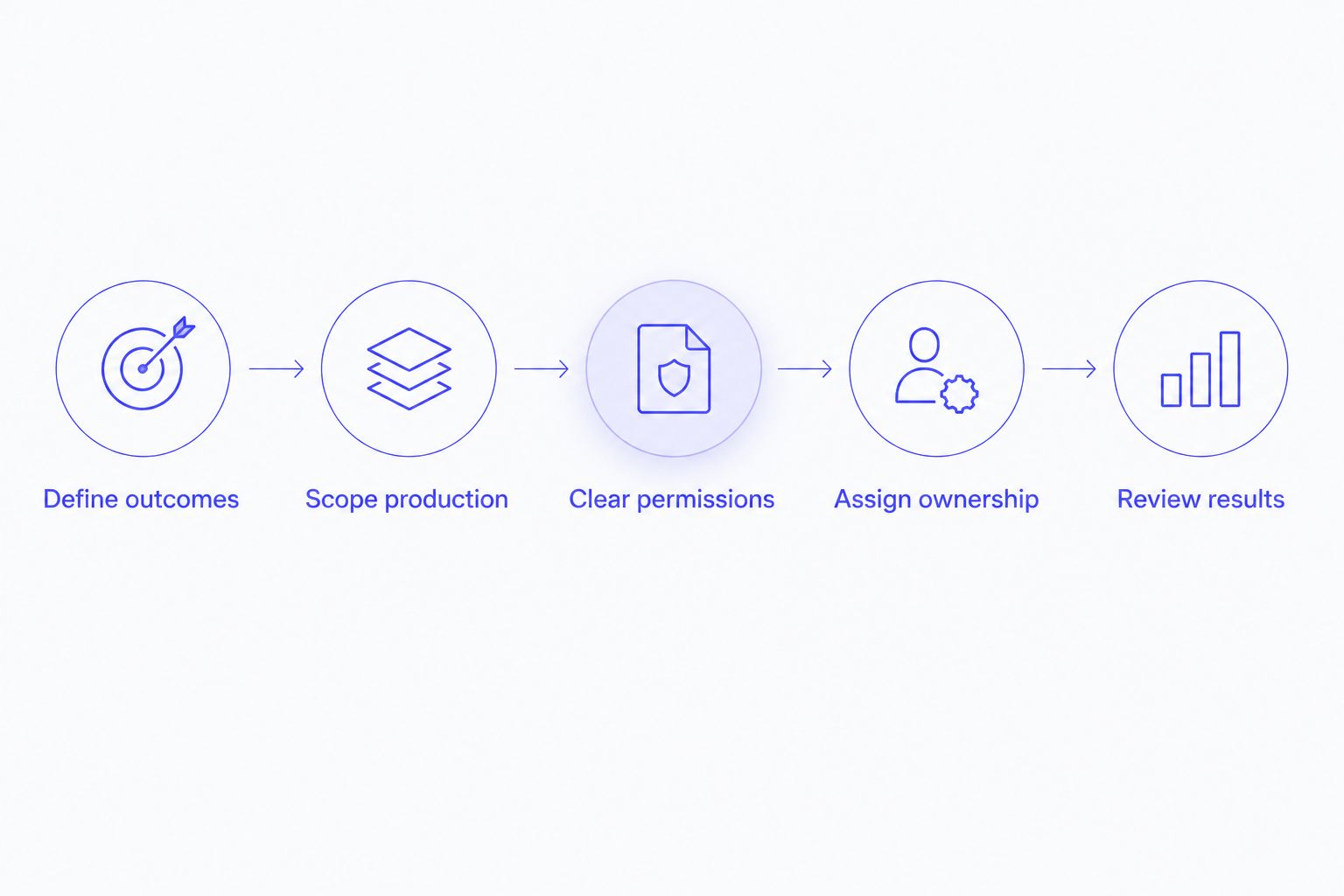
Use this sequence to turn a broad multi-platform request into an operating plan.
- Define outcomes. Choose the primary acquisition or subscription event, and identify the retention measures you will review afterward.
- Scope production. Specify creator selection, creative concepts, deliverables, revisions and approval ownership.
- Clear permissions. Document approved platforms, advertising uses, editing rights and duration for each asset.
- Assign ownership. Name the teams responsible for posting, advertising, tracking and performance decisions.
- Review results. Evaluate creative response and app outcomes, then decide what to repeat, revise or stop.
For your 2026 review process, keep a record of the creative hypothesis beside the results. Otherwise, a winning asset tells you what happened without preserving the reason you commissioned it.
Where a managed creator program fits
The Viral App is best for B2C app teams seeking managed creator production and a system they can eventually own. Its UGC and influencer marketing services center on app growth, with coverage across TikTok, Instagram Reels and YouTube Shorts.
The The Viral App program scope includes 5–60 creators and 300–3,600 videos/month. Those are service-scope figures, not a universal recommendation for every app or a paid-media allocation.
The Viral App tests 4–5 new angles/week and stops underperforming formats within 5–10 days. Weekly reporting covers views, engagement, angle analysis and installs, giving app teams a defined review cadence.
The 90-day program covers foundation, scaling and a running system. Clients choose full transfer of creator relationships, processes, tracking tools and playbooks or continued agency management; winning organic videos become paid creative.
The operational advantage is clear ownership across sourcing, vetting, briefs, scripts, approvals, posting schedules, payments and reporting. The trade-off is the coordination required on your side: a managed program still needs an approval owner, usable app information and agreement on conversion goals.
How do you judge whether the campaign is working?
Review results at the level where you make decisions. Compare creative angles within their channel, then examine the app outcomes associated with the campaign.
Do not equate a strong view count with subscription growth. Inspect installs, activation, retention and subscriptions using consistent definitions, and keep platform-reported results distinguishable from your app's own reporting.
When moving an organic winner into paid distribution, treat the paid version as a new performance test. The original response informs the creative choice; the advertising results determine whether that version supports acquisition.
Expand scope when the evidence supports the next test. That decision is more useful than treating platform count as a growth target.
FAQ
How much should I budget for UGC ads on several platforms?
Build the budget from creator production, usage rights, channel adaptation, campaign operations and paid distribution. Define the deliverables and business goal before requesting a scoped proposal.
Does a UGC agency proposal include advertising spend?
Confirm advertising spend separately in the written scope. Ask whether the proposal covers content production, campaign operations, media buying or a combination of those services.
Can I use the same creator video on TikTok, Instagram and YouTube?
Use the same creator video across those platforms only when your permissions cover the intended uses. Review edits, captions, calls to action and advertising authorization for each destination.
Is organic UGC performance enough to predict paid ad results?
Organic UGC performance does not establish paid advertising performance. Use audience response to select promising creative, then evaluate the paid version against your acquisition and subscription goals.
How many creators does The Viral App manage in a program?
The Viral App's service scope includes 5–60 creators and 300–3,600 videos/month across TikTok, Instagram Reels and YouTube Shorts. Select the campaign scope around your testing workload and operational capacity.
Should I track installs or subscriptions for a subscription app?
Track both installs and subscriptions, with retention alongside them. Installs describe acquisition volume, while subscriptions and retention show what happens after the download.
One last thing
Before approving the campaign, ask who owns the winning assets, creator relationships and operating process afterward. The answer determines whether your team receives reusable capability or needs another handoff to keep the system running.
Bring your target platforms, app conversion goal, approval owner and existing creative inventory to a strategy call. Those inputs support a scoped plan for 2026 without confusing video output with the full acquisition workload.
Scope your multi-platform UGC campaign
Discuss your app goals, creator workload, channel coverage and reporting requirements.