TikTok creator whitelisting has no published market rate in 2026 — it's negotiated per creator as an add-on to their base UGC fee, and the final number depends on usage rights and code duration, not on follower count alone. The line item that catches app marketing teams off guard isn't the whitelisting fee itself; it's the Spark Ads authorization window attached to it, which typically runs 30, 60 or 90 days and resets the negotiation every time it expires.
- TikTok creator whitelisting cost in 2026 is negotiated per creator, not published as a flat industry rate.
- Spark Ads authorization windows typically run 30, 60 or 90 days, and window length moves price more than follower count.
- Exclusivity clauses and full usage-rights buyouts cost more than a code-only Spark Ads grant.
- The Viral App scopes whitelisting duration and usage rights into the creator brief before a campaign starts, not after.
Why this matters
Marketing teams treat whitelisting like a fixed line item because published rate ranges exist for other creator costs. Whitelisting doesn't work that way — it's a permission structure, not a menu price. Before discussing a number, understand how creator whitelisting connects to your ad accounts: the creator hands over a Spark Ads authorization code so the brand can run their organic post as a paid ad, and the price attached to that permission gets negotiated case by case.
Whitelisting is usually the smaller line item on the invoice. The bigger one is the overall TikTok influencer marketing cost for the campaign it's attached to. A fitness app running a two-week install push needs a different whitelisting deal than a fintech app running TikTok ads through the back half of 2026.
How much does TikTok creator whitelisting cost in 2026?
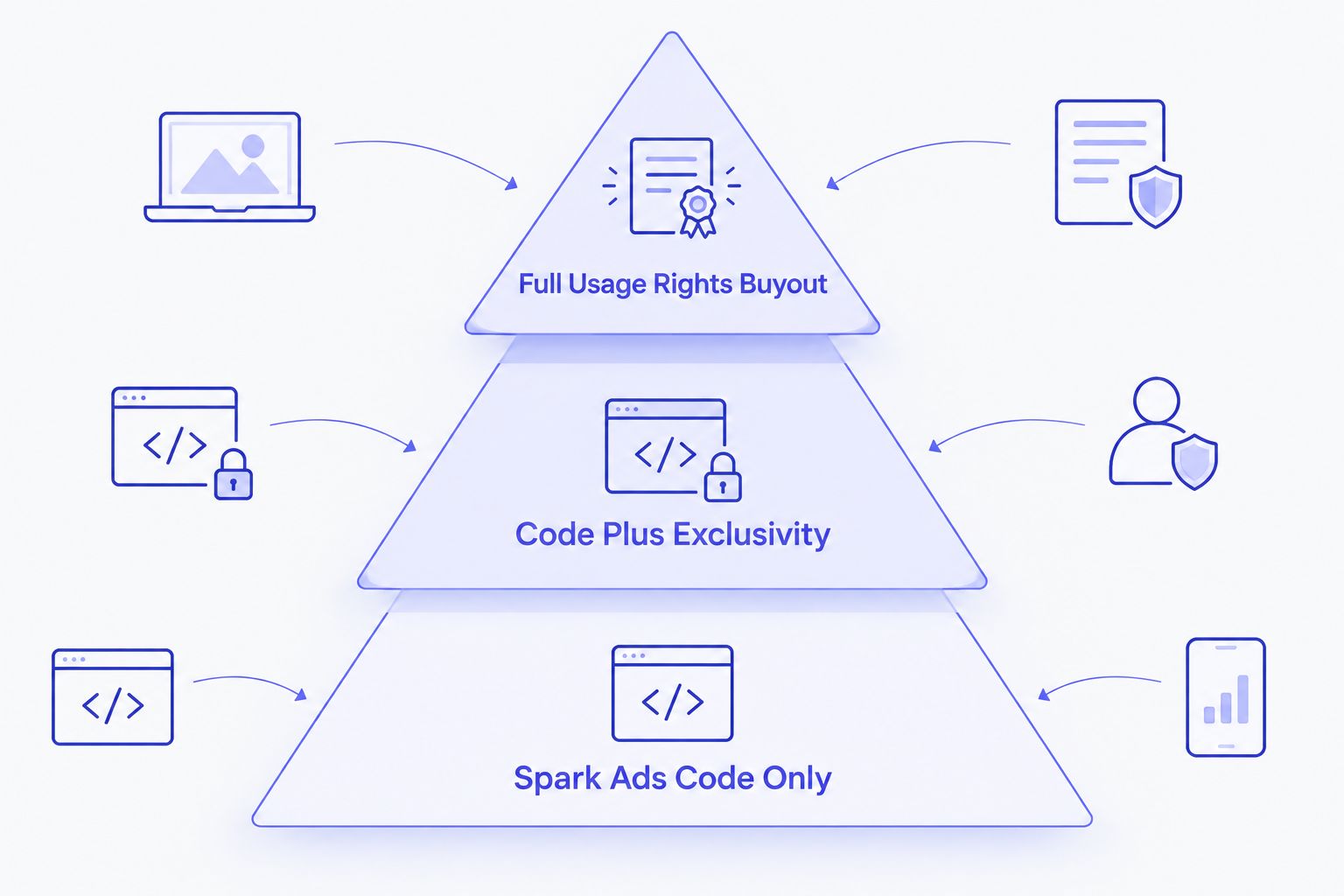
There's no rate card. Ask three agencies what TikTok creator whitelisting cost looks like in 2026 and you'll get three different pricing structures, because the number depends on what usage rights the brand is actually buying, not on a fixed percentage. Three arrangements show up in most creator contracts, and each carries a different price impact on top of the creator's base UGC fee.
| Arrangement | What the brand gets | Price impact vs. base UGC fee |
|---|---|---|
| Spark Ads code only | Boosts the creator's existing post as a paid ad from their own handle | Smallest add-on — often folded into the UGC rate |
| Code plus exclusivity | Same access, plus the creator agrees not to whitelist competing apps | Adds a premium on top of code-only pricing |
| Full usage-rights buyout | Rights to repurpose the raw footage as ads across TikTok, Meta and YouTube | Largest add-on — priced closer to a separate content license |
Why TikTok whitelisting costs vary
Six variables push the number up or down more than anything else written into the contract:
- Creator follower tier and engagement rate — bigger accounts command bigger add-ons, same as their base UGC rate.
- Length of the Spark Ads authorization window — a 30-day code costs less to negotiate than a 90-day renewal.
- Exclusivity terms — locking a creator out of whitelisting for competing fitness, education or fintech apps adds a premium.
- Scope of usage rights — organic boost only is cheaper than a buyout that lets the brand cut the footage into new ad variants.
- Category compliance overhead — fintech and health apps often require extra creator vetting before a code changes hands, which adds time and cost to the negotiation.
- Bundling — whitelisting negotiated into the original UGC deliverable usually costs less than a separate add-on requested after the content is already live.
“Whitelisting price moves with usage rights and code duration, not with follower count alone.”
Is TikTok whitelisting different from Spark Ads?
Yes — Spark Ads authorization is the mechanism, and whitelisting is the broader deal that grants a brand permission to use that mechanism on a creator's content. Generating the code inside TikTok Ads Manager costs nothing; what costs money is the creator's agreement to hand it over and the terms attached to that agreement.
How long do TikTok Spark Ads codes typically run?
Spark Ads codes typically run in 30, 60 or 90-day windows, and most whitelisting negotiations reset when the window expires. Longer windows mean fewer renewal conversations but usually cost more upfront than a short 30-day grant.
Do creators charge extra for exclusivity?
Yes — creators who agree not to whitelist competing apps in the same category charge a premium on top of their base whitelisting fee. This matters most in crowded categories like fitness and fintech apps, where several brands might approach the same creator inside a single quarter of 2026.
The Viral App scopes whitelisting duration, exclusivity and usage rights into the creator brief before a campaign starts, so app marketing teams get one negotiated number instead of a mid-campaign add-on request. That's the difference between a UGC and influencer marketing agency treating whitelisting as an afterthought and treating it as part of the media plan.
Scope whitelisting terms before you sign
Get code duration, exclusivity and usage rights negotiated upfront.
FAQ
How much does TikTok creator whitelisting cost in 2026?
TikTok creator whitelisting cost in 2026 has no fixed rate — it's negotiated per creator as an add-on to their base UGC fee. The price depends on Spark Ads code duration, exclusivity terms and usage rights scope, not on follower count alone.
Is whitelisting the same thing as Spark Ads?
No — Spark Ads authorization is the technical mechanism, and whitelisting is the broader agreement that lets a brand use it on a creator's content. The code is free to generate; the creator's permission to use it is what gets priced.
How long does a TikTok whitelisting deal last?
Most whitelisting deals run on 30, 60 or 90-day Spark Ads authorization windows in 2026. Shorter windows cost less upfront but require more frequent renewal conversations.
Does exclusivity cost extra?
Yes — a creator agreeing not to whitelist competing apps in the same category charges a premium on top of the base whitelisting fee. This matters most in crowded verticals like fitness and fintech.
Is whitelisting included in a UGC agency's base rate?
Sometimes — agencies that bundle whitelisting into the original UGC deliverable typically charge less than agencies that treat it as a separate add-on requested after the content is already live.
What's the difference between whitelisting and a full usage-rights buyout?
Whitelisting grants permission to boost a creator's existing post as a paid ad from their handle. A full usage-rights buyout goes further, granting the brand rights to repurpose the raw footage into new ads across TikTok, Meta and YouTube.
Can I run whitelisted ads without buying usage rights?
Yes — a code-only Spark Ads grant lets you boost the creator's existing post without acquiring rights to edit or repurpose the underlying footage. That's the cheapest of the three common arrangements.
Does whitelisting cost more for fintech or health apps?
Often, yes — fintech and health app categories carry extra compliance vetting before a creator hands over an authorization code, which adds time and cost to the negotiation beyond the base whitelisting fee.
One last thing
The number app marketing teams argue over hardest — the whitelisting add-on itself — is usually the smaller lever in the deal. Locking in a 90-day Spark Ads window with no exclusivity clause almost always beats negotiating a discount on a 30-day code that carries an exclusivity clause. Ask about the window and the exclusivity terms in 2026 before asking about the number.