Yes, TikTok Spark Ads can run without a formal influencer partnership in 2026: you can promote posts from your brand account or use a creator's post after receiving TikTok authorization. The hard limit is permission — you cannot run another account's post as a Spark Ad unless that account authorizes its use, and platform authorization does not replace the commercial usage terms you agree with the creator.
- TikTok Spark Ads can run without an influencer partnership when a brand promotes its own TikTok posts.
- A creator authorization code permits a one-off Spark Ad without requiring an ongoing creator relationship.
- TikTok code windows include 7, 30, 60, and 365 days, subject to creator control.
- Full partnership is optional in 2026; permission from the account that published the post is not.
Why this matters in 2026
Spark Ads preserve the identity and engagement attached to an existing TikTok post. That makes the source account central to setup: a brand controls its own posts, while a creator controls access to creator-published posts.
The distinction matters when you move from organic creator content into paid distribution. A one-off code can support a contained test, while a linked-account workflow fits repeated campaigns involving several posts. The creator UGC to TikTok Spark Ads workflow explains the wider handoff from content production to campaign launch.
Can TikTok Spark Ads run without an influencer partnership?
Yes. TikTok provides three practical Spark Ads routes, and only the third normally requires an ongoing working relationship with the creator.
| Spark Ads route | Influencer partnership required? | Main advantage | Main limitation | Best for |
|---|---|---|---|---|
| Brand-owned post | No | No outside account permission | Ad uses the brand's identity and existing post | In-house creative testing |
| Creator authorization code | No ongoing partnership required | Access is limited to an authorized post and period | Permission expires or can be withdrawn | A contained creator-content test |
| Linked creator account | Usually involves an ongoing creator relationship | Supports repeat campaign operations | Requires account governance and continuing permission | Multiple posts from a proven creator |
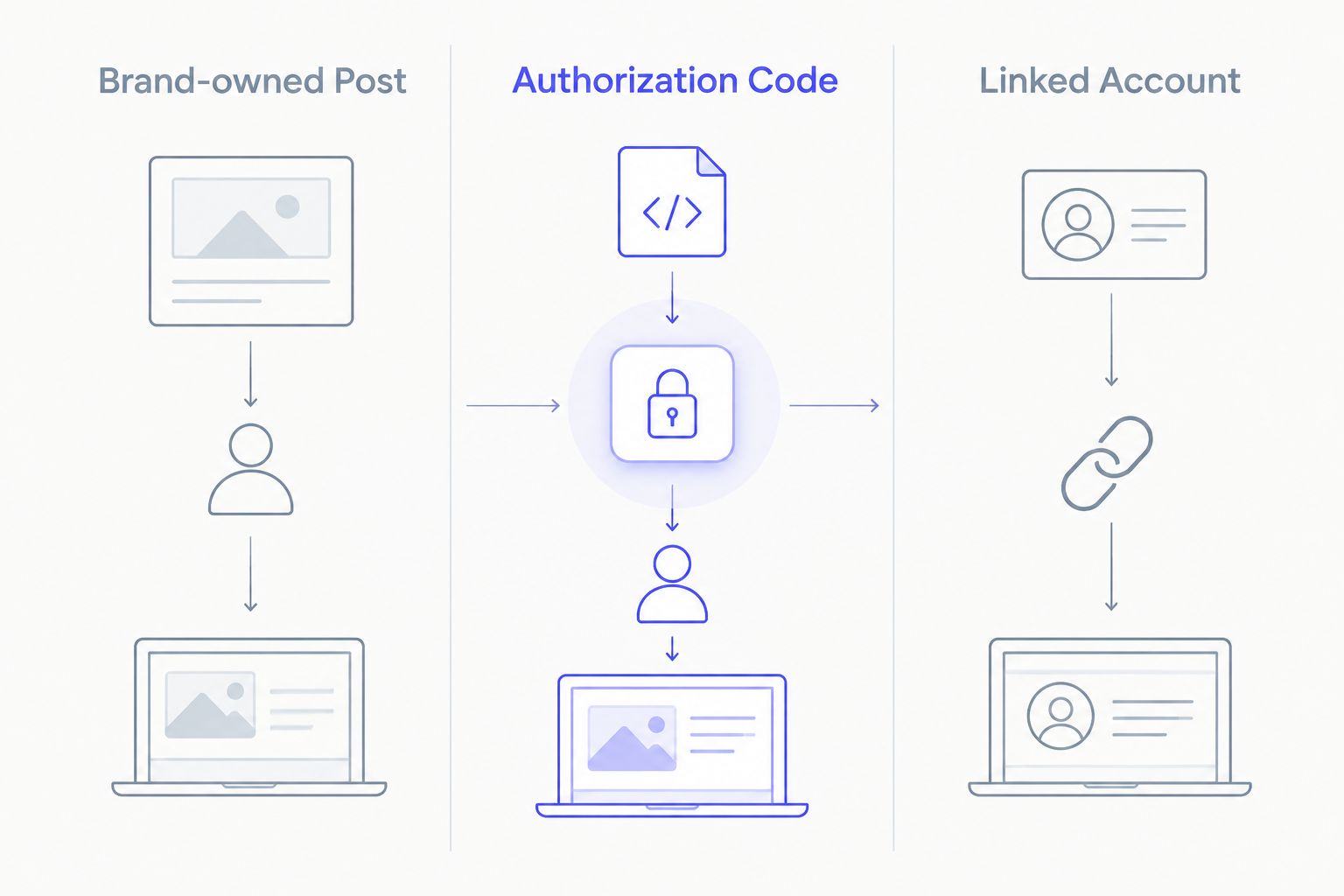
All three routes use existing TikTok posts. The difference is not the ad format; it is who published the post and how the advertiser receives permission to promote it.
Brand-owned Spark Ads: no creator permission required
A business can publish a video on its own TikTok account and promote that post as a Spark Ad. No influencer partnership or creator authorization code is involved because the advertiser controls the publishing account.
This is the cleanest route when your internal team already produces the video. The post retains its organic engagement while paid delivery sends additional traffic through the Spark Ads campaign.
The limitation is identity. The advertisement appears through the brand account rather than a third-party creator account, so this route cannot reproduce the account context of creator-published UGC. It also does not grant access to videos posted by customers, employees using personal accounts, or independent creators.
Best for: app teams testing internally produced TikTok posts before adding creator recruitment. Verdict: use it when the brand account is the intended identity.
Creator authorization: 7, 30, 60, or 365 days
A creator can authorize an advertiser to use an existing post in Spark Ads by generating a video code. TikTok offers authorization periods of 7, 30, 60, or 365 days. The advertiser enters the code in TikTok Ads Manager and uses the authorized post as campaign creative.
This technical process does not require a permanent influencer partnership. The creator can approve a single post for a defined window, and the relationship can end when the campaign or authorization ends.
That does not make the video free to use. The creator and advertiser still need clear terms covering paid media usage, compensation when applicable, editing expectations, campaign timing, and any category restrictions. TikTok's code confirms platform permission; it does not settle those commercial terms for either party.
The main advantage is controlled access. The advertiser receives permission for the relevant post without gaining broad access to the creator's account. The disadvantage is operational: an expired or revoked authorization interrupts delivery, and a new post needs its own approval.
Best for: testing one creator post before expanding the relationship. Verdict: use a defined authorization window and document the usage terms separately.
Linked creator access: built for repeated campaigns
A linked-account or account-level permission workflow reduces repeated code collection when a brand expects to promote several posts from the same creator. This is commonly described as creator whitelisting, although TikTok's interface and permission labels determine the exact setup available to each account.
The upside is campaign continuity. Your media team can manage recurring Spark Ads without treating each approved post as a separate creator-sourcing project. The downside is governance: both sides need to understand which posts can be promoted, how long access lasts, and who can revoke it.
Linked access is still permission, not ownership. A brand does not gain unrestricted rights to a creator's identity or content simply because the accounts are connected. The TikTok creator whitelisting connection guide covers the account handoff in more detail.
Best for: a repeat creator relationship with several approved posts. Verdict: move to linked access after the operating terms are clear.
Why Spark Ads eligibility varies
Whether a post can run without an influencer partnership depends on six concrete factors:
- Who published the post: Your brand can authorize its own post. A post on another account requires permission from that account.
- Whether ad authorization is active: A public video is not automatically available for paid promotion. The post must be eligible and authorized for Spark Ads.
- How long permission lasts: A code can carry a 7, 30, 60, or 365-day window. Campaign timing must fit inside the selected period.
- Whether the creator revokes access: The creator retains control over authorization. A commercial agreement should state what happens if access changes during a campaign.
- How many posts you plan to promote: One approved post fits a code-based test. Repeated posts create more approval and tracking work.
- What usage rights were agreed: TikTok authorization enables the ad technically, while the creator agreement governs the business relationship and content rights.
This is why a no-partnership Spark Ad is not the same as a no-permission Spark Ad. The former is possible; the latter is blocked by the platform's authorization model.
A 2026 campaign brief should identify the publishing account, intended authorization route, paid usage period, and responsible ad account before production starts. Those decisions prevent a finished video from sitting idle while the growth team waits for access.
Can I use a customer's TikTok video as a Spark Ad?
You can use a customer's TikTok video only after the customer authorizes that post for Spark Ads and your business secures the necessary paid usage rights. Tagging your app, mentioning your brand, or posting a positive review does not by itself grant advertising permission.
How long can I run a creator's post as a Spark Ad?
A creator can select an authorization period of 7, 30, 60, or 365 days when generating a video code. Your planned campaign dates must remain inside that window, and the creator continues to control the authorization.
Do I need a creator contract for TikTok Spark Ads?
TikTok's technical setup relies on account authorization rather than checking your commercial contract. You should still document paid usage rights, campaign duration, compensation terms when applicable, content changes, and revocation expectations before spending against a creator's identity.
Which setup fits a mobile app campaign?
Choose the setup based on the creative source and campaign stage, not the Spark Ads label alone.
- Start with a brand-owned post when your team made the content and wants the brand account attached to the ad.
- Use a creator code when one creator post is ready for a defined paid test.
- Use linked creator access when repeated approvals are creating campaign delays across several posts.
- Keep organic and paid rights separate so permission to publish does not get mistaken for permission to advertise.
- Record the authorization end date alongside the campaign schedule to prevent an avoidable interruption.
A creator strategy can exist before you commit to long-term partnerships. The 2026 decision is whether your team needs a single approved asset or a repeatable creator pipeline with recruitment, briefing, permissions, and campaign management.
Where The Viral App fits
The Viral App recruits and manages TikTok and Instagram creators for B2C mobile app companies, including fitness, education, and fintech apps. That service is relevant when the bottleneck is no longer generating one authorization code but operating creator campaigns across multiple people and posts.
The Viral App is best for B2C mobile app teams that need creator recruitment and campaign management rather than a self-serve Spark Ads code workflow. A team that already has approved posts and only needs to enter one code in Ads Manager does not need agency management for that step.
The Viral App should enter the process when creator sourcing, briefing, approvals, and campaign handoffs are consuming the growth team's time. For a brand-owned post test, keep the workflow in-house and use the simplest Spark Ads route.
Build a managed creator pipeline
Recruit and manage TikTok creators for an app-focused UGC campaign.
FAQ
Can TikTok Spark Ads run without an influencer partnership?
Yes, TikTok Spark Ads can run without an influencer partnership when you promote your own account's post or receive limited authorization for a creator post. Another account's content still requires that account's permission.
Can I run a Spark Ad from my brand's TikTok account?
Yes, a business can promote an eligible post published on its own TikTok account. This route does not require a creator code or outside influencer relationship.
Can I run Spark Ads on someone else's video without permission?
No, another account must authorize its post before you can use it in Spark Ads. A public post, brand mention, or positive review is not advertising permission.
How long does a TikTok Spark Ads authorization code last?
TikTok video authorization periods include 7, 30, 60, and 365 days. The creator selects the period and retains control over the authorization.
Is creator whitelisting required for Spark Ads?
No, account-level creator whitelisting is not required for every Spark Ad. A brand can promote its own post, and a creator can provide post-level authorization for a defined campaign.
Does TikTok authorization replace a creator agreement?
No, TikTok authorization only enables the technical use of the post in Spark Ads. Separate terms should cover paid usage rights, campaign duration, compensation when applicable, and revocation expectations.
What's the best Spark Ads setup for a first creator test?
A post-level creator authorization code is the most contained setup for a first creator test. It limits access to an approved post and defined authorization period without requiring account-level access.
When should an app company use The Viral App?
The Viral App fits B2C mobile app companies that need TikTok or Instagram creator recruitment and campaign management. A team running one brand-owned post can keep that simpler workflow in-house.
One last thing
Do not treat the authorization end date as an administrative detail. If a 2026 campaign is scheduled beyond a 7, 30, 60, or 365-day permission window, the media plan and platform access are misaligned before the first impression runs.
Set the authorization period after the test timeline is final, not before. For mobile app teams, The Viral App becomes relevant when that coordination expands from one post into a repeatable creator-led campaign system.